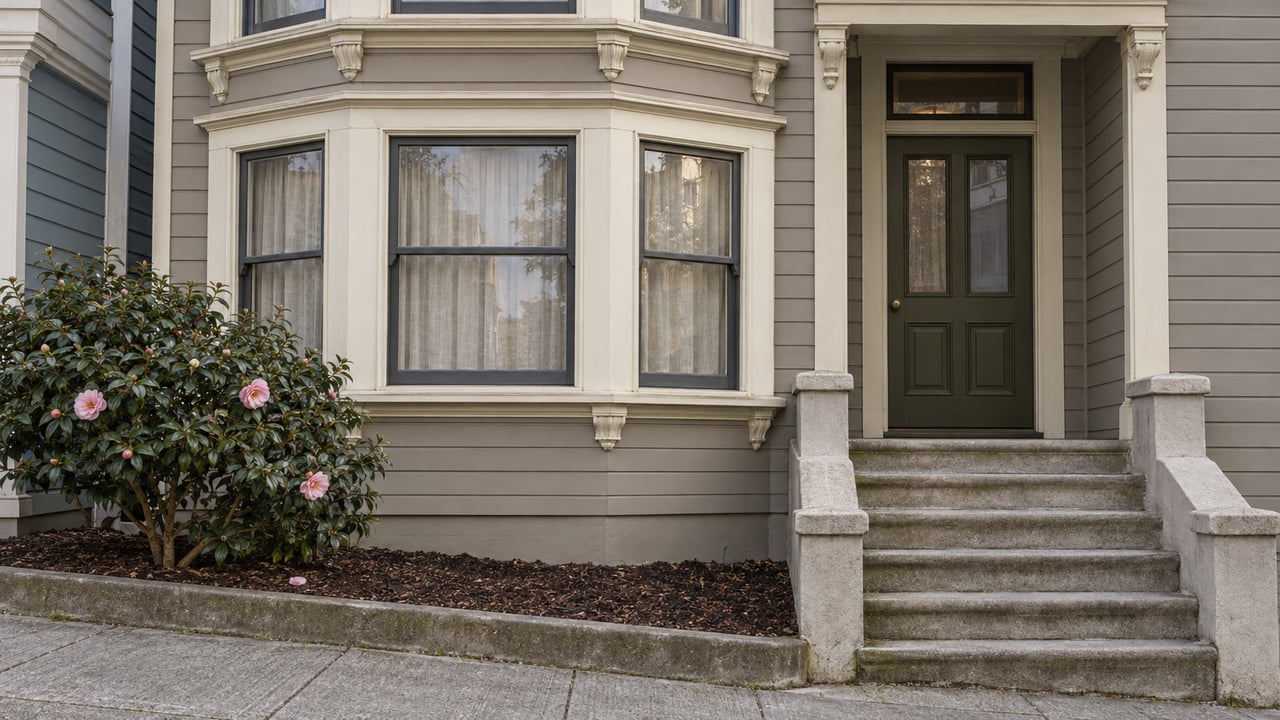
If you start a job in San Francisco this winter and want to live near the Lone Mountain campus, should you sign a lease the week you land, or hold off? In most of the city the timing question comes down to the seasons. Around the University of San Francisco, a second schedule shapes the answer: the university's academic calendar, which falls on top of a citywide market that set records this fall.
Those two schedules leave a gap. The citywide rental market usually slows in November and December. USF's next big wave of arrivals doesn't come until late January. For a renter who can be flexible, the weeks between those two points are probably the least crowded time to compete for a Lone Mountain lease all year.
The citywide market came into fall at a record
Start with the bigger calendar, because it sets the price level for everything else. The San Francisco Chronicle reported that the median asking rent for a one-bedroom in San Francisco was about $3,920 in September 2026. That is the highest ever in nominal dollars and 26% above the $3,110 median in September 2025, according to Apartment List data. The same report put Apartment List's vacancy rate at 2.6% that month, down from 3.8% a year earlier.
The figures depend on who is measuring. CoStar's September 2026 numbers show citywide multifamily vacancy at 3.2%, down from 3.9% a year before, and rent growth of 13.3% for the year. CoStar's Richmond/Western Addition submarket, the closest grouping it reports to the blocks around campus, grew at that same 13.3%. The two data sets track different kinds of rentals, so neither one corrects the other. Both show the same direction: rents are rising fast and fewer units are sitting empty than a year ago.
The reason is mostly about money flowing into the city's economy. The San Francisco Standard reported in August that asking rents for vacant apartments rose 14% between March and July 2026. City chief economist Ted Egan told the outlet, "It's likely that AI investment is indirectly driving most of the private-sector growth." That pressure applies across the whole city. It sets the floor, and Lone Mountain sits on top of it.
This fall, the campus overflow came first
The second calendar is USF's, and this year it ran hotter than it has in a while. The San Francisco Foghorn, USF's student newspaper, reported that the Fall 2026 incoming class of first-years and transfers reached 1,873 students, above the university's target of 1,750. The fall classes of 2023, 2024 and 2025 had all come in under that target.
The university also changed how it houses students. For Fall 2026, USF began requiring first-year students to live on campus. To fit the larger class, Student Housing used floor lounges in Hayes-Healy and Gillson and switched some rooms in Toler from continuing-student use to first-year use, according to the Foghorn. The same report said that about 300 continuing and graduate students were still on the campus housing waitlist, and that some students who never got a room were staying in a hotel or commuting from Oakland.
The university has added some beds of its own. USF converted the former Sisters of the Presentation motherhouse at 2340 Turk Blvd. into Nano Nagle Hall, a 56,000-square-foot building that houses 40 graduate students in single rooms. Forty beds help, but they don't come close to a waitlist that size.
Put the two calendars together and the effect around campus is easy to follow. When on-campus rooms run short, the students who miss out look in the same private flats and apartments that relocating professionals and interim renters are touring. No published data measures what that did to rents on specific Lone Mountain blocks. Still, the direction is the same as the citywide trend: more people competing for the same supply in the same weeks.
Where the quiet weeks fall
Seasonality is the reason the timing question has an answer at all. Rob Warnock, lead economic researcher at Apartment List, told The San Francisco Standard in October that November is typically the slowest month for rentals, with December a close second, and that by January the market is usually picking up again. He added a caveat that matters this year: "There have been Octobers, Novembers, and Decembers where rents have gone up in SF. And with the market as hot as it is now, that may be the case this upcoming winter."
USF's official dates show where the campus side of that cycle starts up again. All of the dates below come from the university's academic calendar and Student Housing page, plus its Spring 2027 orientation schedule and 2026–2027 housing agreement.
| Date | On campus | What it suggests for nearby rentals |
|---|---|---|
| Dec. 9, 2026 | Last day of fall classes | Semester-end plans begin to settle |
| Dec. 11–17, 2026 | Fall final exams | Students who are leaving for spring start moving out |
| Dec. 19, 2026 | Residence hall fall move-out | Campus activity drops for the break |
| Dec. 20–31, 2026 | Winter break and university closure | The quietest stretch on both calendars |
| Jan. 4–22, 2027 | Intersession classes | Activity starts to return |
| Jan. 21, 2027 | Spring move-in for new undergraduates | A new group of arrivals looks for housing |
| Jan. 25, 2027 | Spring classes begin | The campus calendar is fully back on |
| May 22, 2027 | Spring housing occupancy ends at noon | The next major turnover point |
The right-hand column is a reading of the calendar, not a forecast. The pattern still holds up. The slow citywide season Warnock describes runs through November and December, and USF's next group of arrivals doesn't move in until January 21. From the end of October, that gives a renter about twelve weeks in which neither calendar is at its busiest.
How a relocating renter can use the window
Most relocations don't arrive on schedule. A start date might fall in mid-November, or a remodel at home could run past the holidays. Here are three practical ways to make use of the quieter stretch:
- Sign during the slow weeks if your dates allow it. When an owner has fewer applicants, the move-in date and terms are more often open to discussion. The Standard's panel made the same point about listings that have been on the market for a few weeks.
- Bridge with a furnished stay of 30 nights or more. If you arrive before you're ready to commit, a furnished home lets you learn the blocks around Turk, Masonic and Anza before you sign a longer lease.
- Have your paperwork ready before late January. If your search runs into January, plan on more competition for the same flats once spring move-in begins.
The second option depends on a rule. SF Planning defines a short-term residential rental as "a rental of all or a portion of your home for periods of less than 30 nights." Hosts generally need a business registration certificate and an Office of Short-Term Rentals certificate to offer one, though the FAQ allows hosting while a complete application is pending if certain conditions are met. According to the city's short-term rental FAQ, rentals of more than 30 consecutive nights by the same visitors are not subject to short-term rental regulations or hotel taxes, and tenant protections and rent control provisions may apply to stays of 30 days or more. SF Planning also describes Intermediate Length Occupancy, meaning stays of more than 30 consecutive days and less than 364, as a use that requires a specific permit. This is general information, not legal advice. Renters and owners should confirm how these rules apply to a particular unit with the city or a qualified attorney, and the San Francisco Rent Board answers tenant-protection questions.
What the window means for owners
The same timing works in reverse for owners. A Lone Mountain unit that becomes vacant in early December reaches the market during the slowest weeks of the year, when rents may be flat or still rising, as Warnock cautioned. One that becomes vacant in mid-January reaches renters just as the citywide season picks up and USF's spring arrivals begin looking. Leaving a unit empty to wait for better timing has its own cost, so the decision is about tradeoffs, not a fixed rule. It helps to know where your listing date falls on both calendars before you choose it.
New construction isn't going to change this soon. The Planning Commission approved an eight-apartment project at 230 Anza Street, which faces the north edge of the Lone Mountain campus, and SF YIMBY reported in August that no construction timetable had been shared. For the coming winter, the supply around campus is the supply that already exists.
Questions relocating renters ask
Will rents actually drop in November?
There's no guarantee. Warnock describes November and December as the slowest months for demand. He also noted that San Francisco rents have risen in some fall and winter months, and that this year's hot market could repeat that. The more dependable advantage is fewer people competing for each unit, not a lower price.
Does USF's schedule matter if I'm not affiliated with the university?
It can. The flats and apartments near campus serve a mixed pool of renters. When the university's housing runs short, as the Foghorn reported happened this fall, more people end up searching that same private supply.
Is a furnished stay of a month or longer treated like a hotel booking?
San Francisco draws the line at 30 nights. Stays shorter than that fall under the short-term rental rules. Longer stays by the same occupant are outside those rules, and tenant protections may apply, according to SF Planning.
If you're arriving this winter and want a furnished home near Lone Mountain while you decide where to settle, or you own a unit near campus and are deciding when to list it, Home 2 San Francisco can help you pick dates that work with both calendars. Reach out to Pamela Kelley to talk through your arrival or your listing date.